



How to Use an AI Study Guide Maker Without Turning Your Notes Into Noise
A practical, student-first guide to using an AI study guide maker for real learning, not just prettier summaries.
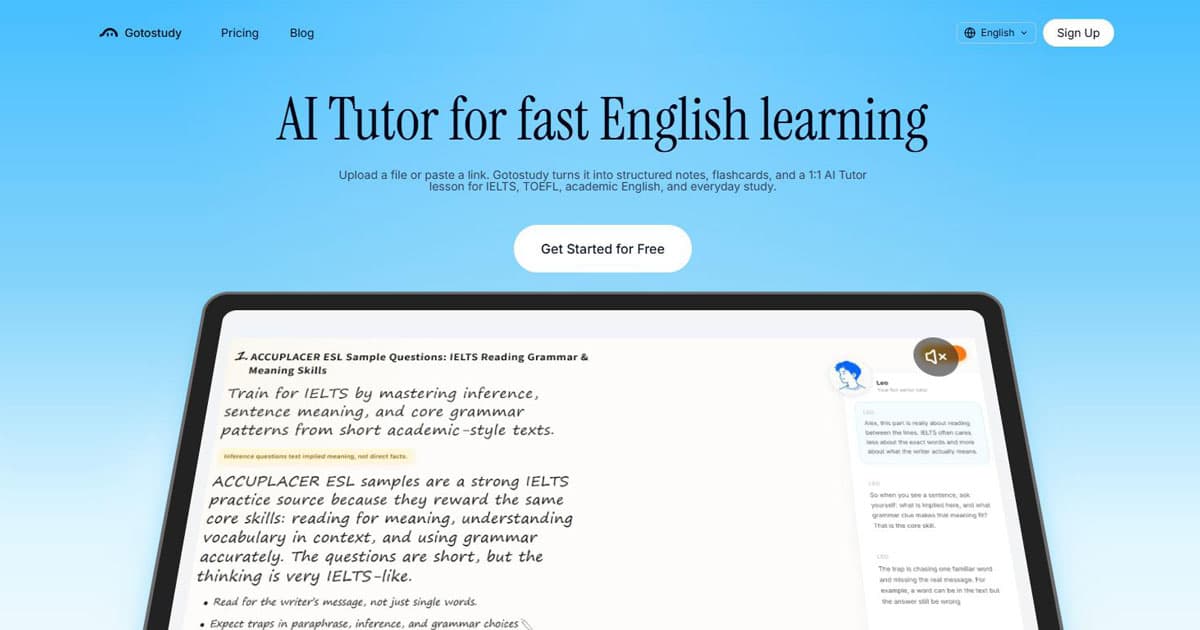
Most students do not need more notes. They need notes they can actually use.
That is the quiet promise of an AI study guide maker: take a messy source, such as a PDF, lecture transcript, textbook chapter, class handout, or pasted link, and turn it into something you can review, question, and remember. The tool is useful, but only if you treat it as a study partner, not a homework vending machine.
This guide is for students who want a practical way to use AI without fooling themselves.
What an AI study guide maker should do
A good study guide is not a shorter version of the original. It should help you answer three questions:
- What are the main ideas?
- What details are likely to matter later?
- Can I recall and apply this without looking?
That means a useful AI study guide maker should create structure, not just summary. Look for outputs like:
- a short overview of the topic
- section-by-section notes
- key terms with plain-language explanations
- examples from the source
- likely exam or discussion questions
- flashcards for active recall
- a short checklist of weak spots to review
If the result only sounds smooth, be careful. Smooth writing can hide shallow understanding.
Start with better source material
AI tools work best when the input is specific. A full textbook chapter may be too broad. A single lecture, article, practice passage, or class note is usually better.
Before you generate a guide, ask yourself:
- What class or exam is this for?
- Do I need a quick review or deep understanding?
- What format will help me study later?
- Do I already know the basics, or am I starting cold?
For example, a TOEFL lecture transcript needs different notes from a biology chapter. An IELTS reading passage needs attention to vocabulary, paragraph purpose, and trap answers. A history source may need timeline, cause and effect, and competing viewpoints.
A simple workflow that actually helps
Here is a reliable process:
1. Generate the first guide
Upload or paste your source. Ask for a study guide with headings, key ideas, terms, examples, and review questions. Keep the first version simple.
2. Check it against the original
Do not skip this. AI can omit details, flatten nuance, or overstate claims. Read the guide beside the source for a few minutes. If something feels too neat, verify it.
3. Ask follow-up questions
The real value often comes after the first draft. Ask:
- "Which parts are easy to confuse?"
- "Give me three questions that test understanding, not memorization."
- "Explain this paragraph in simpler English."
- "What would a teacher likely ask about this?"
- "Turn my weak areas into flashcards."
4. Use active recall
Reading a study guide is not the same as studying. Close the guide and answer questions from memory. Then check. This is slower than rereading, but it tells the truth.
5. Review again tomorrow
Spacing matters. A guide you can review in ten minutes tomorrow is more valuable than a perfect-looking document you never open again.
Where Gotostudy fits
At gotostudy.net, we built Gotostudy around this exact loop: add a file or link, make a structured study guide, ask an AI Tutor follow-up questions, and review with flashcards.
The point is not to replace your thinking. The point is to reduce the friction between "I have material" and "I know what to practice next."
That matters especially for English learners preparing for IELTS, TOEFL, academic classes, or self-study. A normal chatbot starts from a blank box. A study workflow should start from the material you actually need to learn.
What not to outsource
Do not let an AI study guide maker do these parts for you:
- deciding what your course or exam actually values
- checking facts against the original material
- practicing recall without looking
- writing final answers in your own words
- noticing when you only recognize an idea but cannot explain it
Those are the parts where learning happens.
A useful prompt
Try this:
Create a study guide from this material. Include a short overview, 5-8 key ideas, important vocabulary, examples from the source, likely test questions, and flashcards. Keep the language clear. Mark anything that may need verification from the original.
Then follow with:
Quiz me one question at a time. Wait for my answer before explaining.
That second prompt is where the guide becomes practice.
The bottom line
An AI study guide maker is best when it helps you study more honestly. It should make the material clearer, give you better questions, and push you toward recall.
Use it to organize the work. Keep the understanding as your job.