



TOEFL Independent Speaking Practice: Build Clear Answers Without Memorizing
A practical TOEFL speaking guide based on official speaking-section information, with a simple routine for planning, recording, and reviewing answers.
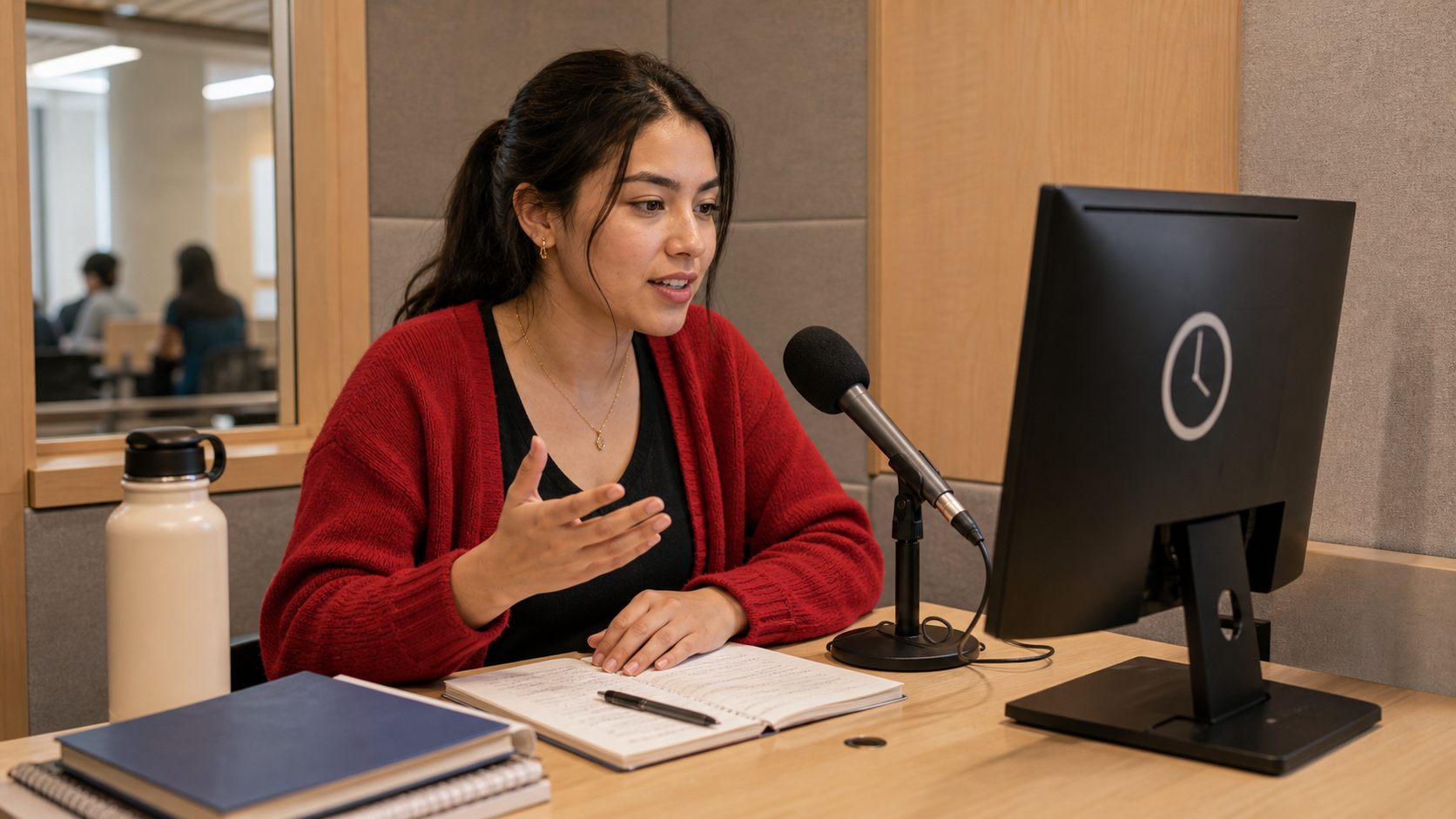
TOEFL Speaking measures whether you can speak clearly in academic and everyday situations. ETS official resources describe the Speaking section and provide preparation materials.
Use ETS pages for the current format and official practice:
This article does not copy protected TOEFL prompts. It focuses on how to practice speaking answers that are clear and flexible.
Do not memorize full answers
Memorized answers sound smooth until the question changes.
A better goal is to build reusable answer habits:
- state a clear position
- give one reason
- explain it with a concrete example
- finish cleanly
This works better than forcing advanced vocabulary into every response.
Plan in keywords
Before speaking, write only a few keywords:
- answer
- reason
- example
- closing word
Do not write full sentences. If you write too much, you may read instead of speak.
Record one answer twice
Use this routine:
- Record your first answer under time pressure.
- Listen once without judging yourself too harshly.
- Pick one problem: unclear reason, weak example, grammar that blocks meaning, or too many pauses.
- Record the same answer again.
The second attempt is where you learn control.
Keep examples small
You do not need a dramatic story.
A small, real example is usually stronger:
- a class project
- a teacher's advice
- a part-time job
- a problem you solved
- a study habit that worked
The example only needs to support your answer.
Where Gotostudy fits
At gotostudy.net, you can paste your speaking transcript or notes, generate a study guide, and ask an AI Tutor for follow-up questions. You can also save repeated problems, such as weak transitions or unclear examples, as flashcards.
Use AI to review your own speaking. Do not use it to memorize a perfect script.
Bottom line
TOEFL speaking improves through repeated, reviewed output. Plan briefly, speak clearly, record yourself, fix one problem, and answer again.